






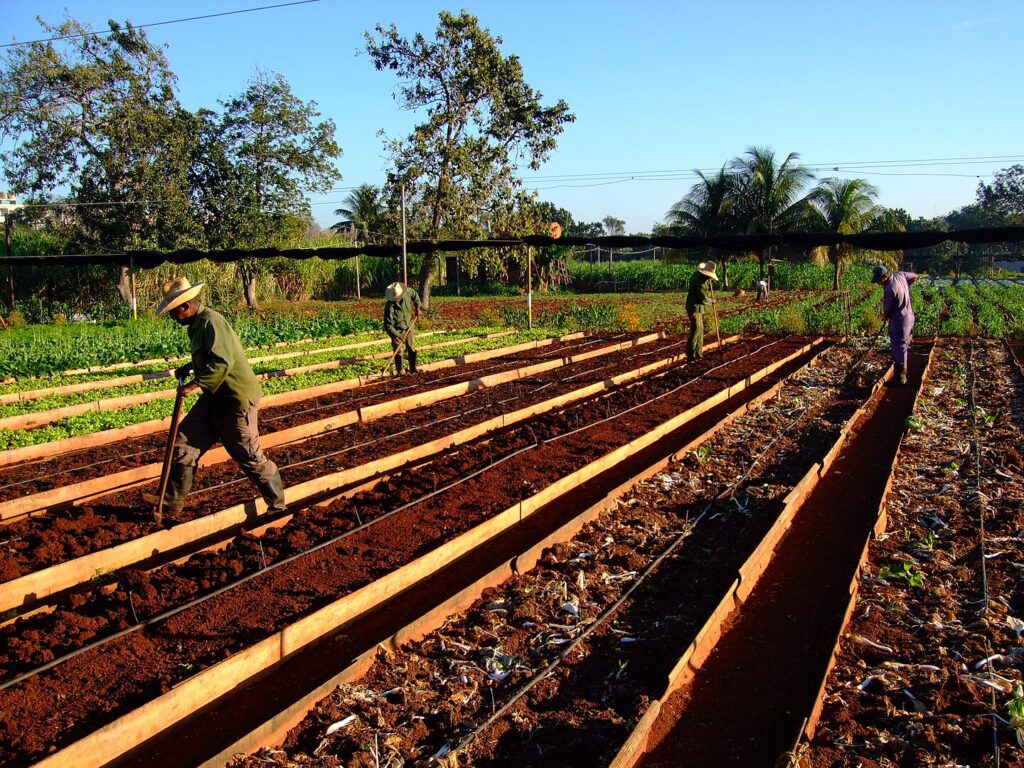
Researchers introduced new ways of organizing. It ranges from Rothschild-Whitt’s (1979) work on collectivist-democratic organizations to contemporary studies of platform cooperativism, degrowth, and pluriversal imaginaries.
 Curated by Business Science Daily — peer-reviewed sources, human-verified.
Learn more
Curated by Business Science Daily — peer-reviewed sources, human-verified.
Learn more
About Our Curation Process
Business Science Daily curates academic research in business and economics. Each featured study is selected from reputable, peer-reviewed journals, institutional repositories, or working papers (e.g., Elsevier, Sage, NBER, SSRN).
Articles are carefully summarized to ensure clarity and accuracy, with direct citations or links to original sources. Our process emphasizes transparency, academic integrity, and accessibility for a broader audience.
Learn more in our Editorial Standards & AI Policy.
Overall, Vijay, Berkowitz, Huybrechts, Audebrand, Barros, and Fotaki (2025) synthesize 296 articles and 83 books across 50 years of scholarship.
The study proposes three core areas: imaginaries (collective projections of a desirable future), alterity (modes of otherness and resistance), and subjectivity (the cultivation of relational, collective selves).
The article also maps intra-organizational processes (prefiguration, commoning, solidarity-making) and inter-organizational processes (scaling, collaboration, inter-cooperation), as well as the frictions that arise at contact zones between alternative and dominant institutional orders.
Alternative organizing: a fragmented field in need of integration
Alternative organizing refers to forms of organizing that (a) exhibit values, modes of exchange, work, ownership, and practices that do not follow the logic of capitalist accumulation and profit maximization; (b) offer different possibilities for organizing social relations and bringing into being a more equitable world; and (c) craft solutions that differ from those typically proposed within dominant institutional structures. Examples include cooperatives, worker-owned enterprises, alternative food networks, community care infrastructures, and diverse commoning practices.
Genealogy: from Rothschild to the pluriverse
- 1977–1990s: Early work on “collectivist-democratic organizations” (Rothschild-Whitt, 1979) and alternative education (Kegan, 1981).
- 1996–2006: Gibson-Graham’s “The End of Capitalism (As We Knew It)” and “A Postcapitalist Politics” — feminist critique of hegemonic capitalism.
- 2008–2014: Edited volumes (Parker et al., The Routledge Companion to Alternative Organization) and special issues.
- 2015–present: Proliferation of research on cooperatives, commons, solidarity economy, decolonial and feminist alternatives.
Three approaches to “alternative to what?”
Focuses on organizational forms distinct from profit-maximizing, hierarchical, shareholder-owned corporations. Examples: co-ops, social enterprises, mutuals.
Challenges the metabolic order of capitalism predicated on alienation of labor and nature. Emphasizes anti-capitalist or post-capitalist imaginaries.
Contests colonialism, racism, caste, patriarchy. Draws on decolonial, feminist, Indigenous, and posthumanist approaches.
Three constitutive dimensions of alternative organizing
The authors identify three interrelated dimensions that answer the questions: “why?” (imaginaries), “how?” (alterity), and “by or for whom?” (subjectivity).
1. Imaginaries — collective projections of a desirable future
Imaginaries are “collective projections of a desirable and feasible future” (Benjamin, 2024). Alternative organizing involves dealing with ontologically, epistemologically, ethically, and politically distinct imaginaries. The review identifies plural imaginaries including: cooperative, feminist, Indigenous, decolonial, post-capitalist, degrowth, eco-socialist, queer, and pluriversal imaginaries.
2. Alterity — modes of otherness and resistance
Alterity involves a discursive process of constant positioning, definition and redefinition, and rejection of certain norms and values. It can be understood as a mode of otherness that normatively reframes practices (e.g., solidarity, autonomy, ecological co-viability) and as a mode of resistance — a refusal to align with the oppressor. Sites of alterity include physical spaces (heterotopias), abstract sites (ideologies, events), and temporal sites (past, present, future).
3. The alternative subject — becoming otherwise
Dominant imaginaries perpetuate notions of individuals as competitive economic agents. Alternative organizing cultivates different subjectivities: relational and collective, shaped by affective resonance and collective struggles. Key concepts include “bounded emotionality” (Mumby & Putnam, 1992), “arts of revolutionary self-cultivation” (Gibson-Graham), and “activist performativity” (Alakavuklar).
Processes and frictions of societal transformation
Intraorganizational processes
- Prefiguration: Creating change in the present that one hopes to see in society (Graeber, 2004; Monticelli, 2021, 2022).
- Experimentation: Testing innovative practices to assess transformative potential.
- Cooperation/mutuality: Building reciprocal relationships prioritizing shared interests.
- Horizontal associationism: Establishing nonhierarchical structures and participatory decision-making.
- Commoning: Preserving, developing, and managing shared resources (Federici, 2018; Ostrom, 1990).
- Solidarity-making: Cultivating ethical and affective commitment to mutuality (Eynaud & de Franca Filho, 2023; Fotaki, 2022).
Interorganizational processes
- Scaling: Expanding alternative principles or practices to augment impact (scaling up vs. scaling out).
- Collaborations: Joint initiatives among alternative organizations via informal networks, arenas, or meta-organizations.
- Inter-cooperation: Synergies between alternative organizations to coordinate strategies and share resources.
- Interorganizational solidarity-making: Strengthening alliances across alternative organizations through trust and mutual support.
Frictions arise between alternative organizing and institutional orders, within alternative organizations, and between different forms of alternative organizing. Drawing on Tsing (2005), friction refers to the “awkward, unequal, unstable, and creative qualities of interconnection across difference.” Frictions are not merely resistances but (re)generative forces driving transformation. Examples include tensions between participatory ideals and bureaucratization, the “iron law of oligarchy,” and degeneration risks.
Multilevel outcomes of alternative organizing
Degeneration and regeneration
Alternative organizing is not immune to degeneration: practices can evolve away from their initial alternative intent, leading to decoupling or zombification. However, studies also document “regeneration” through hiring, socialization, governance innovations, and mobilization of subsidiaries (Daudigeos & Jaumier, 2021; Bretos & Errasti, 2017).
Future research avenues
Politics of plurality
- How can situated, place-based studies of intellectual traditions inform our understanding of alternative organizing in the Global South?
- How do memories and legacies of anti-colonial struggles shape alternative imaginaries?
- What organizing forms foster multispecies or planetary imaginaries that displace fossil fuel imaginaries?
- How do frictions between differing value systems generate new political and ethical possibilities?
Counter-hegemonic collaborations
- How do collaborations among alternative organizations differ from conventional interorganizational collaborations?
- What kind of boundaries define who “belongs” (human or nonhuman) in alternative organizing?
- Can ephemeral, hyperlocal, and non-scalable forms of organizing be understood as expressions of radical alterity?
- Under what conditions do collaborations lead to degeneration or regeneration?
Toward societal transformation
- How can alternative organizations create alternative structures (political debate spaces, justice systems, digital commons)?
- How does alternative organizing suffer, resist, and rebel against institutional violence?
- How can historical methods and political economy frames help analyze past, present, and future trajectories?
Alternative epistemologies and pedagogies
- How can “weak theory” (Gibson-Graham), thick description, and creative writing practices unsettle dominant knowledge production?
- What creative, collaborative, or collective practices can resist appropriation and foster pluralism?
- How can educational practices rooted in place-based knowledge systems contribute to reimagining organizing in postcolonial contexts?
- How can pedagogical practices embrace friction as a resource for cultivating critical reflection and relational subjectivities?
Alternative organizing offers the potential to address root causes rather than symptoms of complex problems. The authors write: “At the heart of this effort lies a collective imagination — one in which we imagine different worlds together, writing shared stories and plotting futures in which we can all flourish.”
Full reference
Vijay, D., Berkowitz, H., Huybrechts, B., Audebrand, L. K., Barros, M., & Fotaki, M. (2025). Another world is possible—it is already here: A review and research agenda on alternative organizing. Academy of Management Annals, 19(1), 1‑49. https://doi.org/10.5465/annals.2024.0102
Key contributions: Integrative review of 296 articles and 83 books; genealogy of alternative organizing research; three constitutive dimensions (imaginaries, alterity, subjectivity); mapping of processes and frictions; multilevel outcomes; future research agenda on plurality, counter-hegemonic collaborations, societal transformation, and alternative epistemologies/pedagogies.
This summary is for educational and commentary purposes. All findings are accurately represented from the original open-access article.