






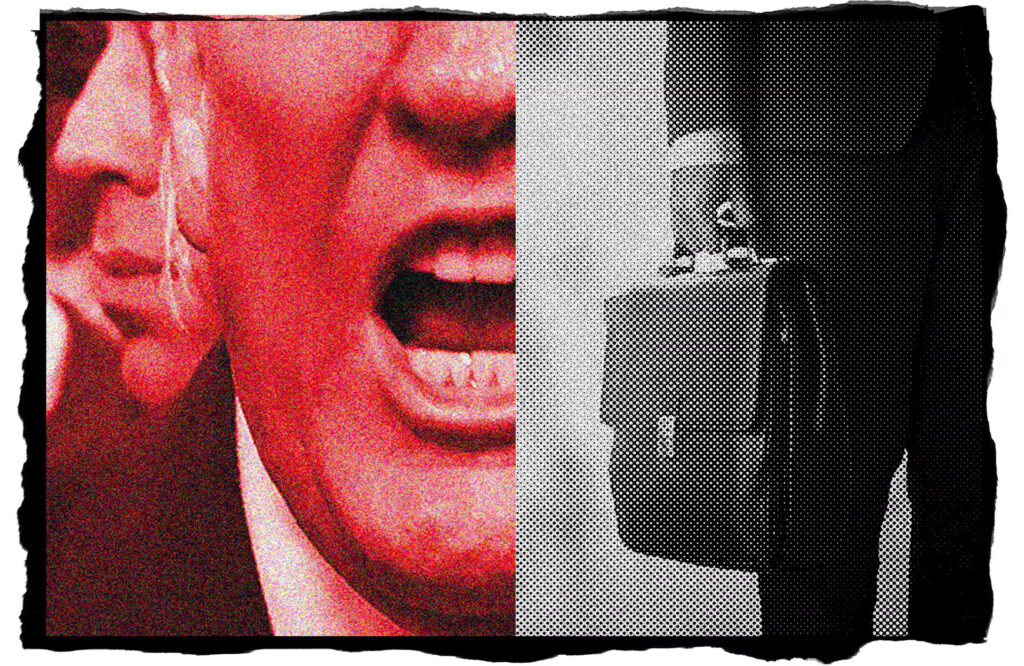
The Unseen Cost of Leader Compassion
Despite the clear organizational need to punish misconduct, leaders often have significant discretion over how severely they respond to rule-breaking. While prior research has extensively examined how power influences punitive behavior, relatively little attention has been paid to how the latitude of available punishment options—independent of formal power—shapes leaders’ decisions.
 Curated by Business Science Daily — peer-reviewed sources, human-verified.
Learn more
Curated by Business Science Daily — peer-reviewed sources, human-verified.
Learn more
About Our Curation Process
Business Science Daily curates academic research in business and economics. Each featured study is selected from reputable, peer-reviewed journals, institutional repositories, or working papers (e.g., Elsevier, Sage, NBER, SSRN).
Articles are carefully summarized to ensure clarity and accuracy, with direct citations or links to original sources. Our process emphasizes transparency, academic integrity, and accessibility for a broader audience.
Learn more in our Editorial Standards & AI Policy.
A study published in the Academy of Management Journal by Wei Jee Ong and Grace J. H. Lim investigates this gap, proposing that leaders use discretion to reduce punishment severity primarily out of concern for their subordinates’ well-being, but that this tendency varies markedly based on the leader’s psychopathic traits.
How was the study conducted?
The researchers tested their theory across five separate studies, using a combination of multisource field surveys and controlled experiments.
In the primary field study, 386 leader-follower dyads from diverse industries in India provided data, with leaders rating their own discretion and psychopathy, and subordinates independently rating the severity of punishments they received.
Follow-up experiments involved behavioral tasks—such as deducting points from an employee’s bonus for incorrect work—and vignette-based scenarios where leaders made decisions about employee tardiness or personal business conducted on company time.
Does having more discretion lead to lighter punishments?
The findings show a consistent negative relationship between punishment discretion and punishment severity. In Study 1, each one-point increase on the discretion scale (rated 1 to 5) corresponded to a 0.35-point decrease in subordinates’ reported punishment severity.
However, this effect was not uniform across all leaders. For leaders scoring one standard deviation below the mean on a psychopathy measure, the effect of discretion was substantially stronger (b = -0.42).
For leaders scoring one standard deviation above the mean on psychopathy, the effect was markedly weaker (b = -0.20) and, in some experimental conditions, disappeared entirely or reversed direction.
What psychological mechanism explains the difference?
The critical mediator turned out to be prosocial motivation—the desire to have a positive impact on others—rather than simple harm aversion. Leaders higher in psychopathy reported significantly lower levels of prosocial motivation.
Subsequently, when given greater discretion, leaders with low prosocial motivation punished more severely, while those with high prosocial motivation punished less severely.
The indirect effect of the discretion-by-psychopathy interaction via prosocial motivation was statistically significant, with a bootstrapped confidence interval ranging from 0.01 to 0.13. Harm aversion, by contrast, did not function as a reliable mediator.
How do observers perceive consistent versus lenient punishers?
A critical and ironic finding emerged from the final studies. Leaders who reduced their punishment severity by a smaller amount when moving from low-discretion to high-discretion situations—a pattern typical of higher-psychopathy leaders—were rated as more effective and more moral by both subordinates and third-party observers.
In Study 4, participants rated a manager who showed no change in punishment across discretion levels as significantly more effective (mean rating of 3.62 on a 5-point scale) than a manager who decreased punishment (3.37) or increased punishment (3.30).
This effect was statistically robust and was mediated by perceptions that the leader held pro-organizational motives. Notably, these favorable ratings persisted even when observers were explicitly informed about the leader’s psychopathic traits.
What is the practical scale of the effect?
While the per-incident reductions in punishment severity appear modest—averaging between 1.7 and 2.8 points on experimental scales—the cumulative organizational implications are substantial.
A leader overseeing dozens of misconduct incidents annually who consistently reduces punishment when given discretion may inadvertently signal weak justice norms across an entire department.
When multiplied across hundreds of leaders in an organization, even small individual leniency effects can shape climate and compliance in measurable ways.
The study suggests that organizations may need to provide structured decision support for lower-psychopathy leaders, who are otherwise inclined toward compassionate but potentially inconsistent enforcement.
Learn more using tabs below.
Discretion, psychopathy, and the mercy-justice dilemma
Leaders often possess discretion over how severely to punish misconduct. Yet punishing is psychologically aversive; leaders experience discomfort when harming followers. The job impact framework suggests that leaders use discretion to reduce punishment severity, prioritizing follower well-being. Leaders higher in psychopathy, however, lack interpersonal concern and therefore should show less leniency even when they have discretion.
Multi-method evidence across five studies
386 leader-follower dyads from diverse industries in India. Leaders rated their own discretion and psychopathy; followers rated punishment severity.
Finding: Discretion negatively predicted severity (b = -.35, p < .001). The interaction with psychopathy was significant (b = .10, p = .035). Low-psychopathy leaders reduced punishment strongly; high-psychopathy leaders reduced punishment less.
2a (n = 399): Anagram scoring task. Higher discretion (2-8 points) led to lower deductions than lower discretion (4-6 points). The interaction replicated.
2b (n = 597): Cafe vignette (low, moderate, high discretion). High-discretion by psychopathy interaction was positive. High-psychopathy leaders did not decrease punishment; in some conditions they increased it.
202 participants recalled two incidents involving the same leader with different levels of discretion. Punishment reduction scores predicted leader effectiveness.
Finding: Among leaders who did not increase punishment, greater reduction predicted lower effectiveness (b = -.09, p = .033). Consistent punishment was associated with higher effectiveness ratings.
894 participants evaluated a manager (Jamie) across three punishment change conditions (decrease, no change, increase) with or without psychopathy information.
Finding: The no-change condition received the highest effectiveness ratings (M = 3.62) compared to decrease (M = 3.37) and increase (M = 3.30). Pro-organizational motives mediated the effect. Psychopathy information did not moderate the results.
Across field and experimental designs, discretion reduces punishment severity primarily for low-psychopathy leaders. High-psychopathy leaders punish more consistently across discretion levels. Observers rate consistent punishers as more effective leaders, even when they are aware of the leader’s psychopathic traits.
Why psychopathy matters: Prosocial motivation
Effects were most pronounced when moving from moderate to high discretion, rather than from low to moderate. Leaders use extra latitude when they have genuine flexibility, and psychopathy shapes that choice.
Psychopathy is associated with reduced harm aversion, but prosocial motivation—the desire to have a positive impact on others—emerged as the more proximal psychological driver in organizational contexts. Leaders actively seek to benefit followers, not merely avoid harming them.
Consistency is perceived as effective leadership
Leaders high in psychopathy punish more consistently across discretion levels (showing less leniency). This behavior—typical of higher psychopathy—leads observers to rate them as more effective and more moral, because consistency signals pro-organizational motives.
Practical and theoretical implications
- Low-psychopathy leaders may be overly lenient when given discretion. Organizations can help them balance considerations by highlighting the deterrent benefits of appropriate punishment.
- Using multiple decision-makers for severe punishment cases can reduce the influence of any single leader’s aversion to punishing.
- Anchoring decisions on past precedents may reduce leaders’ reactivity to current discretion levels.
- Discretion is distinct from power: power is associated with harsher punishment, whereas discretion (latitude of options) promotes leniency among low-psychopathy leaders.
- Observers may misattribute consistent punishment to pro-organizational motives rather than to underlying psychopathy.
- Psychopathy can be functional in punishment contexts, but this is not a universal advantage.
- Misconduct type: Highly costly misconduct may evoke retributive motives rather than leniency.
- Psychopathy facets: Callous affect, boldness, and disinhibition may have differential effects.
- Context realism: In Study 2b (vignette), high-psychopathy leaders punished more under high discretion, suggesting that situational cues matter.
- Observer role: Third-party observers and punishment recipients may differ, as recipients typically prefer leniency.
Full reference and data access
Ong, W. J., & Lim, G. J. H. (2026). Who avoids punishment? How discretion and psychopathy shape leaders’ responses to misconduct. Academy of Management Journal, 69(2), 354‑379. https://doi.org/10.5465/amj.2024.0229
Supplemental material, preregistrations, and data: https://osf.io/tfq6y
This summary is for educational and commentary purposes. All findings, hypotheses, and figures are accurately represented from the original Academy of Management Journal article.
Academy of Management — derivative summary prepared for scholarly communication.