






By BSD –
 Curated by Business Science Daily — peer-reviewed sources, human-verified.
Learn more
Curated by Business Science Daily — peer-reviewed sources, human-verified.
Learn more
About Our Curation Process
Business Science Daily curates academic research in business and economics. Each featured study is selected from reputable, peer-reviewed journals, institutional repositories, or working papers (e.g., Elsevier, Sage, NBER, SSRN).
Articles are carefully summarized to ensure clarity and accuracy, with direct citations or links to original sources. Our process emphasizes transparency, academic integrity, and accessibility for a broader audience.
Learn more in our Editorial Standards & AI Policy.
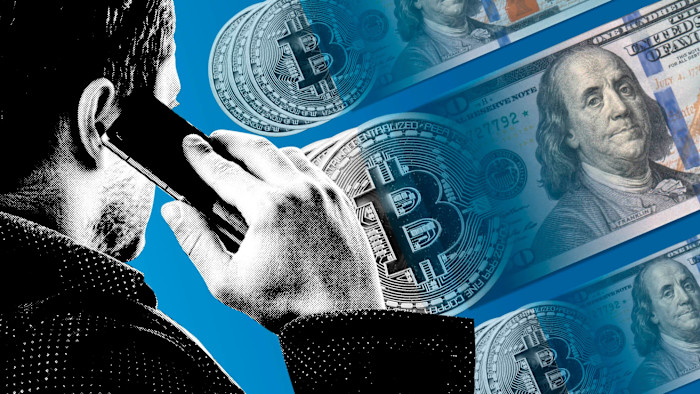
Dupuis and Gleason’s 2021 analysis addresses an emerging topic on how cryptocurrencies are used as a tool for money laundering purposes through six potential scenarios.
The paper published in the Journal of Financial Crime, applies Kane’s regulatory dialectic—a framework traditionally used to explain banking innovation—to the cryptocurrency ecosystem.
The authors demonstrate that the “cat-and-mouse” dynamic between regulators and financial criminals has not only persisted but accelerated in the blockchain era. The “cat-and-mouse” is a game where criminals innovate new laundering methods, regulators react with new rules, and criminals develop new evasion techniques.
By examining six current money laundering vectors, the authors provide both a theoretical framework and practical roadmap for understanding, and potentially mitigating the complex financial dilemma.
Read more by navigating the interactive tabs below.
Money Laundering with Cryptocurrency: Open Doors and the Regulatory Dialectic
How cryptocurrency enables money laundering through six “open doors,” analyzed through Kane’s regulatory dialectic framework, with implications for regulators and financial institutions.
Dupuis & Gleason (2021) examine cryptocurrency’s role in money laundering through Kane’s regulatory dialectic paradigm—a continuous cycle of market innovation followed by regulatory reaction. The study identifies six “open doors” still available for money laundering via digital assets and analyzes current regulatory responses.
Summary
The article provides a comprehensive overview of cryptocurrency money laundering mechanisms through the lens of Kane’s regulatory dialectic theory. The study argues that Bitcoin offers relatively low anonymity, yet several “open doors” remain for laundering illicit funds.
Core Findings:
- Regulatory Dialectic in Action: A continuous “cat-and-mouse” game where criminals innovate new laundering methods, regulators react with new rules, and criminals develop new evasion techniques.
- Anonymity Myth: Most cryptocurrencies (excluding privacy coins) are traceable with >90% probability via blockchain analysis tools like Chainanalysis, CypherTrace, and Orbit.
- Six Current Open Doors: Tumblers, OTC markets, privacy coins, decentralized exchanges (DEXs), direct retail purchases, and mining fronts.
- Scale Limitations: While laundering is possible, significant limitations exist for large-scale operations due to liquidity constraints and technological advancements in tracking.
Key Data Points:
- 46% of Bitcoin transactions facilitate illegal activity (Foley et al., 2019)
- Bitcoin transactions can be mapped with >90% probability (Koshy et al., 2014)
- 25% of all Monero transactions are estimated to be illicit (Moser et al., 2018)
- Only 3.5% of Zcash addresses are fully shielded (Quesnelle, 2017)
The Regulatory Dialectic Framework
Kane’s (1977) regulatory dialectic theory describes the continuous interplay between financial market participants and regulators. In the cryptocurrency context, this manifests as:
The Cycle:
- Innovation: Criminals develop new money laundering methods using cryptocurrency features
- Regulation: Governments implement AML/KYC rules and restrictions
- Evasion: Criminals innovate new techniques to circumvent regulations
- Re-regulation: Authorities develop new, more restrictive rules
Historical Context:
- Shadow Banking (2007 Crisis): Banks evaded national supervision through creative financial maneuvers
- Offshore Markets: AML/CFT regulations emerged as reactions to offshore money transmission
- Cryptocurrency Markets: Daily innovation in cryptoassets prompts quasi-daily regulatory evolution
Current Regulatory Landscape:
- Complete Bans: Algeria, Bolivia, Morocco, Nepal, Pakistan, Vietnam
- Institutional Restrictions: Bangladesh, Iran, Thailand, China, Colombia
- EU AML5 Directive: First comprehensive virtual currency regulation (2019)
- CBDC Development: China, Venezuela, EU members exploring central bank digital currencies
The dialectic predicts that as regulation narrows, innovation will increase to preserve cryptocurrency’s valuable privacy features.
Debunking the Anonymity Myth
Contrary to popular belief, cryptocurrency transactions are not anonymous but pseudonymous, with significant transparency through blockchain analysis.
Key Misconceptions vs Reality:
- Myth: Bitcoin transactions are completely anonymous
- Reality: All transactions are recorded on public blockchain; >90% can be traced to origin
- Myth: Digital wallets provide complete privacy
- Reality: Wallets are anonymous, but transactions between wallets are transparent and traceable
- Myth: Cryptocurrency is the perfect crime tool
- Reality: Fiat-to-crypto gateways require identification on regulated exchanges
Tracking Capabilities:
- Academic Research: Koshy et al. (2014) demonstrated >90% mapping probability
- Commercial Tools: Chainanalysis, CypherTrace, Orbit, Elliptic AML
- Government Partnerships: IRS, FBI, DEA collaboration with Chainanalysis
- Exchange Compliance: Most major exchanges (Coinbase, Kraken, Bitstamp) enforce KYC
The Critical Weak Point:
The “fiat threshold” – converting cryptocurrency to government-issued currency – represents the most vulnerable point for money launderers, as regulated exchanges require identification and report suspicious activity.
Six Open Doors for Money Laundering
Despite regulatory efforts, six primary methods remain available for cryptocurrency money laundering, each with different characteristics and regulatory status.
| Tactic | Cost | Large-Scale Applicability | Regulatory Status | Key Features |
|---|---|---|---|---|
| Tumblers/Mixers | Average | High | Preliminary | Blends illicit coins with legitimate transfers; used in $3B Plus Token scam |
| OTC Markets | Average (3-8% fees) | Medium | Varies by jurisdiction | Person-to-person transactions; estimated 3-4x official market volume |
| Privacy Coins | Low | High | Preliminary | Monero, Zcash, Dash; only 3.5% of Zcash addresses fully shielded |
| Decentralized Exchanges (DEXs) | Low | Increasing | Unresolved | Uniswap, Bancor; no KYC, user controls private keys |
| Direct Retail Purchases | High | Medium | Varies by jurisdiction | Real estate, gold, diamonds, cars purchased with crypto |
| Mining Fronts | Average | Limited | Non-existent | Mix illicit funds with legitimate mining proceeds |
Detailed Analysis of Key Methods:
1. OTC Markets – The Author’s Firsthand Experience:
- Platform: LocalBitcoins.com
- Transaction: $100,000 Bitcoin purchase in Dubai coffee shop
- Process: Cash exchange, QR code scan, blockchain verification
- Fees: 3% negotiated rate
- Regulatory Response: Case-by-case arrests; Homeland Security operations
2. Privacy Coins – Reality Check:
- Monero: Most private via stealth addresses and ring confidential transactions
- Zcash: Only 3.5% addresses shielded; 98.9% transactions traceable
- Dash: Bitcoin fork with similar vulnerabilities
- Regulation: FATF guidance (2019); some exchanges delist privacy coins
3. DEXs – The Unregulated Frontier:
- Definition: “Distributed ledger protocols enabling transactions without centralized intermediaries” (Lin, 2019)
- Features: No KYC, user-controlled keys, cannot be shut down by governments
- Examples: Uniswap, Bancor, Cryptobridge, WavesDEX
- Limitations: Not user-friendly, no fiat off-ramp, limited support
Policy Implications & Future Research
Regulatory Predictions:
- Continued Innovation: New anonymous transaction methods will emerge as regulation tightens
- CBDC Proliferation: Central bank digital currencies may displace private cryptocurrencies
- Privacy Erosion: Increased surveillance capabilities will reduce financial privacy
- Asymmetric Response: Regulators will continue playing “catch-up” with innovators
Social Implications:
- Privacy Rights: Balancing crime prevention with individual financial privacy
- Personal Freedom: Increasing restrictions on financial transactions
- Cost Burden: Compliance costs affect legitimate users and criminals alike
- Global Coordination: Need for international regulatory harmonization
Managerial Implications:
For Financial Institutions:
- Invest in blockchain analytics tools (Chainanalysis, Elliptic)
- Develop crypto-specific AML/KYC procedures
- Monitor emerging DEXs and privacy coin transactions
- Train compliance teams on crypto money laundering techniques
For Regulators:
- Update “withholding agent” definitions to include DEXs and smart contracts
- Develop graduated regulatory approaches based on risk assessment
- Foster public-private partnerships for intelligence sharing
- Consider privacy-preserving compliance technologies
Future Research Directions:
- CBDC Impact: Effects on privacy and money laundering patterns
- DEX Evolution: Regulatory challenges of decentralized finance
- Cross-jurisdictional Analysis: Effectiveness of different regulatory approaches
- Technological Solutions: Privacy-enhancing compliance technologies
- Longitudinal Studies: Tracking innovation-regulation cycles over time
References
Dupuis, D., & Gleason, K. (2021). Money laundering with cryptocurrency: open doors and the regulatory dialectic. Journal of Financial Crime, 28(1), 60-73.
Key References:
- Foley, S., Karlsen, J., Tālis, A., & Putnin̦š, J. (2019). Sex, drugs, and bitcoin: How much illegal activity is financed through cryptocurrencies? Review of Financial Studies, 32(5), 1798-1853.
- Kane, E.J. (1977). Good intentions and unintended evil: The case against selective credit allocation. Journal of Money, Credit and Banking, 9(1), 55-69.
- Koshy, P., Koshy, D., & McDaniel, P. (2014). An analysis of anonymity in bitcoin using P2P network traffic. Financial Cryptography and Data Security.
- Moser, M., et al. (2018). An empirical analysis of traceability in the Monero blockchain. Proceedings on Privacy Enhancing Technologies.
- Wegberg, R.V., Oerlemans, J., & van Deventer, O. (2018). Bitcoin money laundering: mixed results? Journal of Financial Crime, 25(2), 419-432.