






By BSD –
 Curated by Business Science Daily — peer-reviewed sources, human-verified.
Learn more
Curated by Business Science Daily — peer-reviewed sources, human-verified.
Learn more
About Our Curation Process
Business Science Daily curates academic research in business and economics. Each featured study is selected from reputable, peer-reviewed journals, institutional repositories, or working papers (e.g., Elsevier, Sage, NBER, SSRN).
Articles are carefully summarized to ensure clarity and accuracy, with direct citations or links to original sources. Our process emphasizes transparency, academic integrity, and accessibility for a broader audience.
Learn more in our Editorial Standards & AI Policy.
When Uncle Sam picks up the tariff as a weapon, the global trading system undergoes a profound transformation. The study by Dong, R., & Lu, X. (2025) analyzes this strategic shift, where economic interdependence is leveraged as a tool of statecraft.
This new posture from the United States directly challenges the long-standing principles of multilateralism and comparative advantage.
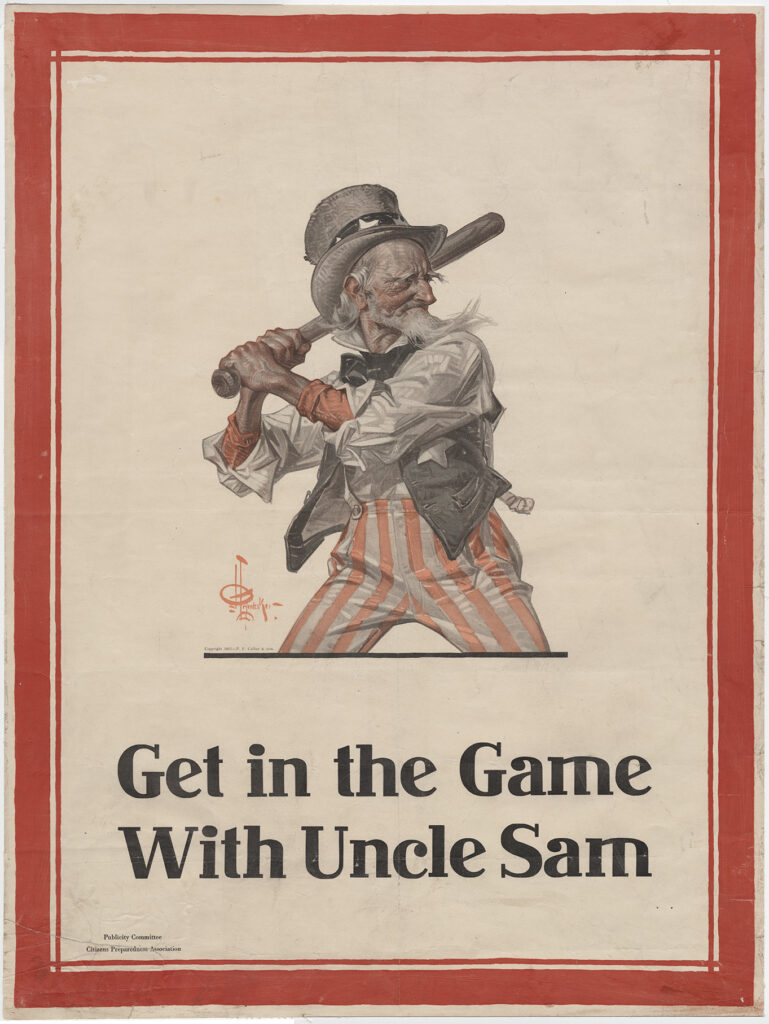
The “America First” doctrine has moved from Uncle Sam’s poster to his policy manual, catalyzing protectionism and inciting retaliatory trade wars with measurable consequences.
The study employs a multi-country, multi-sector computable general equilibrium (CGE) model to simulate four distinct scenarios of escalating U.S. trade protectionism.
The analysis evaluates 50 economies and 15 aggregated industries, assessing outcomes across varying degrees of tariff escalation and international retaliation.
The results highlight a pivotal tension. While unilateral protectionism may yield limited and short-term advantages for specific sectors within the initiating country, it consistently triggers reciprocal measures.
Accordingly, the key finding reveals that global value chains demonstrate notable resilience and adaptability in response to policy shocks. When bilateral trade barriers rise, commerce does not cease, but it redirects.
However, this approach comes with clear downsides, as it makes the entire system less efficient and introduces greater uncertainty.
Read more by navigating the interactive tabs below.
Global Impact of Weaponizing Trade: Scenarios of USA First, Protectionism Policy and Trade War
A CGE model analysis simulating economic impacts of US tariff escalation across four scenarios, revealing that while unilateral protectionism offers temporary gains, retaliatory responses impose significant costs on all economies and fundamentally reshape global trade patterns.
Executive Summary
Dong & Lu (2025) employ a multi-country multi-sector computable general equilibrium (CGE) model with non-log-linear input-output linkages to analyze four trade policy scenarios reflecting potential US protectionism following the 2024 presidential campaign. The study examines 50 countries and regions across 15 aggregated industries.
Core Finding: While the USA may achieve some net gains by increasing tariffs unilaterally, it incurs economic costs when China and other trade partners retaliate. The trade war significantly reduces US-China trade share by over 95%, leading to trade diversion to other regions.
Simulation Scenarios Analyzed
| Scenario | Description | Key Policy Actions |
|---|---|---|
| US_CHN60 | Unilateral US action against China | US increases tariffs on all Chinese imports by 60% |
| US_CHN_ALL6010 | Expanded trade war | 60% tariff on China + 10% tariff on all other countries |
| US_CHN_MEX_CAN_ALL702510 | Comprehensive protectionism | 70% on China + 25% on Mexico/Canada + 10% on others |
| Semiconductor Sanctions | Technology-targeted measures | 10-60% iceberg costs on China’s semiconductor industry |
Scenario Design Rationale
Scenarios are based on actual 2024 presidential campaign proposals and recent US policy statements. Each scenario examines both unilateral actions and retaliatory responses, analyzing both short-run (labor immobile) and medium-to-long-run (labor mobile) effects.
“During Trump’s 2024 campaign, The Washington Post reported consideration of a 60% Chinese tariff plan. On November 25, 2024, Trump proposed additional 10% tariff on China and 25% tariff on imports from Canada and Mexico.”
The scenarios reflect realistic policy proposals that could be implemented following political shifts in US trade policy direction.
Causal Logic Chain
IF The USA implements protectionist trade policies (tariff increases, semiconductor restrictions)
THEN Import prices rise for US consumers and producers
BECAUSE Tariff costs are passed through the supply chain, increasing production costs
IF Import prices rise significantly
THEN Producers substitute away from more expensive foreign inputs
BECAUSE Cost minimization drives sourcing decisions toward cheaper alternatives
IF Affected countries retaliate with equivalent measures
THEN US exports face higher barriers in foreign markets
BECAUSE Retaliation creates symmetric trade restrictions against US products
IF Bilateral trade barriers increase significantly
THEN Trade diversion occurs to third-party countries
BECAUSE Global supply chains adapt by rerouting trade through less restricted pathways
Methodological Framework
Computable General Equilibrium Model
The study employs a multi-country multi-sector CGE model based on Baqee and Farhi (2024) that incorporates international trade and non-log-linear input-output linkages, overcoming limitations of traditional log-linear (Cobb-Douglas) production networks.
“Traditional models assume log-linear production networks, but real input-output data show significant non-linearities. Our model captures these non-linearities, which significantly increases estimated gains and losses from trade protectionism.”
This methodological innovation provides more accurate estimates of trade policy impacts than previous models.
Key Structural Parameters
Elasticity of Substitution: σ=0.9 (household consumption), φ=0.5 (factors-intermediate), ε=0.2 (across industries)
Labor Mobility: Short-run (immobile across sectors) vs. Medium-to-long-run (mobile across sectors)
Production Structure: Nested CES framework with labor as sole factor of production
Key Empirical Findings
US-China Trade War Impacts
Scenario US_CHN60 (Unilateral): US gains 0.171% real GDP, China loses 0.930%
With Retaliation: US loses 0.112%, China’s loss reduces to 0.594%
Trade Share Decline: 95.57%-96.56% reduction in US-China bilateral trade
Regional Winners and Losers
Beneficiaries: Vietnam, Cambodia, Mexico gain from trade diversion
Significant Losers: Canada, Mexico (in comprehensive scenarios), Europe, Africa
Trade Realignment: China shifts trade to Americas (excluding US) and Africa; US redirects to Asia/Oceania and Africa
Sectoral Impacts
Most Affected Sectors: Agriculture, wood processing, energy and chemicals, services
Employment Risk: Workers in import/export dependent sectors face highest unemployment risk
Semiconductor Sanctions: 78.47% trade share decline in semiconductor sector with retaliation
Research Philosophy & Justification
Research Paradigm
Post-positivist quantitative analysis
“We employ a computational general equilibrium model to simulate counterfactual policy scenarios, generating quantitative estimates of economic impacts across multiple countries and sectors.”
The rationale: This approach combines rigorous mathematical modeling with empirical data to generate testable predictions about trade policy impacts.
Methodological Innovation
Non-log-linear production networks
“Compared to log-linear production networks common in literature, accounting for non-log-linear production networks significantly raises the gains and losses from trade protectionism.”
The rationale: This methodological advancement provides more realistic estimates by capturing actual input-output relationships in global value chains.
Causality Claims
Counterfactual simulation with policy shocks
“We quantify changes in equilibrium wages, prices and labor allocation by solving a log-linear system, closely following the exact hat algebra method used in trade literature.”
The rationale: The model identifies causal effects through exogenous policy shocks while accounting for general equilibrium feedback effects.
Policy Relevance
Real-world scenario analysis
“Our analysis provides warning about potential economic costs of trade weaponization and offers evidence for policymakers considering protectionist measures.”
The rationale: The study bridges academic research with policy analysis by simulating realistic trade policy scenarios based on actual political proposals.