







The book “Building Digital Technological Capabilities: A Global South Perspective” provides a grounded, research-based roadmap for companies. It explains how firms can build, scale, and sustain their digital capabilities. The authors emphasize how companies turn digital tools into real business value.
 Curated by Business Science Daily — peer-reviewed sources, human-verified.
Learn more
Curated by Business Science Daily — peer-reviewed sources, human-verified.
Learn more
About Our Curation Process
Business Science Daily curates academic research in business and economics. Each featured study is selected from reputable, peer-reviewed journals, institutional repositories, or working papers (e.g., Elsevier, Sage, NBER, SSRN).
Articles are carefully summarized to ensure clarity and accuracy, with direct citations or links to original sources. Our process emphasizes transparency, academic integrity, and accessibility for a broader audience.
Learn more in our Editorial Standards & AI Policy.
The authors message is clear. Digital transformation isn’t simply about adopting AI, cloud computing, or automation. It is about reshaping organizational structures, decision-making systems, and business models to unlock the potential of these technologies.
Paulo N. Figueiredo is a full professor in Technology and Innovation Management at EBAPE, Fundação Getúlio Vargas (FGV), in Brazil, and a Senior Research Associate at the University of Oxford’s Department of International Development. With decades of field research in the Global South, he is an expert in how firms build technological capabilities over time. Figueiredo also founded and serves as editor-in-chief of the International Journal of Technological Learning, Innovation and Development.
Shaker A. Zahra holds the Robert E. Buuck Chair of Entrepreneurship and is a Professor of Strategy & Entrepreneurship at the Carlson School of Management (University of Minnesota). He is globally known for his work on international technology-driven entrepreneurship, corporate innovation, and digital capabilities. Zahra has received numerous awards — including the 2014 Global Award for Entrepreneurship Research — and is a Fellow of the Academy of Management.
The book focuses on digital technological capabilities in the Global South—Africa, Latin America, and Asia. It emphasizes that digital capability is now a fundamental business resource, as crucial as finance, marketing, or operations. Companies that refuse to develop these skills risk stagnation. Those that embrace them can gain resilience, adaptability, and ultimately lasting competitive advantage.
The book brings together 29 international experts across 11 chapters, covering different areas. By clicking on the title of each chapter you can view a brief summary:
Chapter 1: Empowering the digital workforce: government initiatives, industry partnerships, and educational reforms Samia Melhem and Dina Danif Richani
Chapter 1 of the book focuses on the critical need for digital skills as the foundation for a successful digital economy and outlines the roles of different stakeholders in building these capabilities.
The authors argue that digital skills are the essential soft infrastructure required for any nation to succeed in the digital economy. The chapter emphasizes that a successful digital transformation strategy cannot focus solely on technology but must adopt a whole-of-nation approach. It is driven by strong leadership, to build a digitally competent workforce and an inclusive digital culture.
The authors highlight a critical and urgent global digital skills gap, where millions of jobs remain unfilled even as automation displaces roles, making large-scale upskilling and reskilling a top priority for economic survival and growth.
The responsibility for closing this gap is a collaborative effort shared by three key stakeholders.
Governments must play the central role by integrating digital literacy into formal education, promoting lifelong learning, investing in physical infrastructure for equitable access, and upskilling their own civil servants.
The private sector is crucial for defining in-demand skills, providing training aligned with market needs, and offering certifications.
Meanwhile, academia must reform curricula from primary schools to universities, moving beyond a focus on hardware to emphasize effective teaching, problem-solving, and integrating digital competencies across all subjects, including essential lessons in cyber safety and ethics.
Ultimately, a nation’s ability to thrive in the digital age depends on this tripartite partnership effectively empowering its entire workforce with the necessary digital capabilities.
Researchers provides numerous global examples, including:
Singapore & the Philippines: Government-sponsored online upskilling platforms.
Kaduna State, Nigeria (“Click-On Kaduna”): Training youth and women in conflict zones for digital jobs.
Kerala, India: A successful, long-term strategy for integrating ICT into public school education.
Finland: Offering a free national online AI course.
Saudi Arabia: A government-industry partnership to build skills for the electric vehicle sector.
They concluded that building a digitally skilled workforce is non-negotiable for economic competitiveness and social inclusion. It requires collaboration between government, industry, and academia to create a comprehensive ecosystem for digital skills development, from foundational literacy to advanced specializations. This collaborative, whole-of-nation effort is the bedrock upon which successful digital transformation is built.
Read more [here]
Chapter 2: Harnessing data for development: defining a new strategy for Africa in the digital economy Padmashree Gehl Sampath
This chapter, Harnessing data for development: defining a new strategy for Africa in the digital economy, presents a critical analysis and a proposed framework for how African countries can leverage data to achieve successful digital transformation. The core problem is that the digital economy offers immense potential for development but poses two major challenges for developing countries, especially in Africa because of:
Weak Institutions: A historical failure to build the basic institutions necessary for economic change, social cooperation, and conflict management.
Regulatory Deficits: The difficulty in regulating the digital economy, which is characterized by market concentration, data extraction, and threats to privacy.
Therefore, the authors identify three key agents of change that redefine the economy of Africa:
- The Platform Economy: Creates layered, often anti-competitive markets and facilitates massive data extraction.
- Smart Manufacturing: Uses sensors and IoT to create smart factories and products, leading to efficiency gains but also job displacement and new data collection avenues.
- Artificial Intelligence (AI): Relies on large datasets (often from platforms and smart manufacturing) and can perpetuate and worsen social biases if not carefully managed.
These technologies are interconnected and layered, making a siloed policy approach ineffective. For Africa to succeed in the digital economy, the role of the state must be broadened. It must move beyond narrow industrial policy to actively shape a digital ecosystem that harnesses data for economic development while simultaneously protecting citizens, promoting social cooperation, and ensuring that the benefits of digital transformation are equitable and inclusive. This requires a holistic, data-for-development strategy that tightly couples economic policy with data governance.
You could find out more about the chapter [here]
Chapter 3: Unveiling regulatory dynamics in digital banking: a cross-sectional analysis of evolution and adaptation Fariba Seyedjafarrangraz, Claudia De Fuentes and Michael Zhang
Unveiling Regulatory Dynamics in Digital Banking, provides a comprehensive, cross-sectional analysis of the regulatory landscape for digital banking across 88 countries. It aims to categorize regulators and digital banking ecosystems, track their evolution between 2014 and 2022, and understand the dynamic relationship between regulatory frameworks and the advancement of digital banking.
he chapter opens by establishing the critical role of digital transformation in the banking industry, driven by competition with fintech startups and evolving customer expectations. It highlights the essential but complex role of regulators, who must foster innovation while ensuring security and customer protection. The research identifies a gap in the systematic categorization of regulators and sets out to group countries based on specific indicators and analyze whether this grouping is static or dynamic over time.
The research employs the K-Means Clustering algorithm (an unsupervised machine learning technique) to group countries based on their regulatory and digital banking attributes. The analysis was conducted for the years 2014 and 2022 to enable a dynamic comparison.
The clustering analysis for 2014 and 2022 revealed a dynamic landscape. Countries were categorized into groups with descriptive names such as:
- Digital Banking Pioneers: Advanced in both digital banking and regulation (e.g., Canada, Switzerland, Japan in 2022).
- Progressive Adopters: Evolving digital banking with strong regulators (e.g., Australia, Singapore, Denmark in 2022).
- Regulated Developers: Developing digital banking with moderate regulators (e.g., Mexico, Vietnam, Philippines in 2022).
- Digital Banking Initiators: Basic digital banking with very weak regulators (e.g., Nigeria, Pakistan, Guatemala in 2022).
The findings bridge a gap in the literature by providing a systematic, empirical categorization of regulators and digital banking. The study confirms that regulatory frameworks and digital banking advancements are deeply intertwined. The diverse country trajectories underscore the absence of a one-size-fits-all approach and highlight the need for balanced, tailored strategies that simultaneously foster innovation and ensure robust oversight.
Read more [here]
Chapter 4: Building foundational capabilities for the digitalisation of manufacturing in Africa and Latin America Fernando Santiago, Andrea Heredia Zurita and Ruth Pollak
This chapter investigates the macro-level factors that determine the readiness for the digitalisation of manufacturing in Africa and Latin America. It aims to identify the foundational capability gaps that hinder these regions from harnessing digitalisation as a driver of industrialisation and provides a diagnostic framework to inform policy.
The authors contextualizing the challenges faced by Africa and Latin America, including premature de-industrialization, low adoption of Advanced Digital Production (ADP) technologies, and a growing manufacturing development gap compared to Asia. The central question is which capability gaps impede these regions’ ability to use digitalisation for industrialisation.
The analytical framework moves beyond firm-level “readiness” for technology uptake to focus on the macro-level foundational capabilities that enable such uptake. Drawing on Andreoni, Chang, and Labrunie (2021), the chapter identifies four cumulative layers of capabilities essential for the digital transformation of manufacturing:
- Enabling Infrastructure: Reliable energy and high-quality digital connectivity.
- Production Capabilities: Basic (investment, skills) and intermediate (operational efficiency, technology absorption) manufacturing competencies.
- Innovation Capabilities: Efforts (R&D, advanced skills) and outputs (patents, publications) that allow for the adaptation of technologies to local contexts.
- Digital Capabilities: The actual engagement with digital technologies, measured through the import and export of Production Technologies with Digital Potential (PTDP) and ADP technologies.
Main Findings
Africa
- Top Performers: Tunisia, Morocco, and South Africa show the strongest overall capabilities.
- Promising Dynamics: Rwanda leads among low-income countries, outperforming its income group in most indicators. Senegal and Burundi show significant progress across many indicators.
- Regional Strengths: Northern and Southern Africa, along with Indian Ocean island economies, host the most capable countries. However, progress is slow, and South Africa shows concerning stagnation.
Latin America
- Top Performers: Chile, Mexico, Brazil, Costa Rica, and Uruguay lead the region.
- Promising Dynamics: Brazil and Costa Rica show the most progress (improving in 13 of 16 indicators). Mexico is the regional leader in digital capabilities (trade in ADP technologies). El Salvador stands out among lower-middle-income countries.
- Regional Challenges: Despite good internet access, this has not translated into widespread ADP adoption or productivity gains. The quality of connectivity (e.g., 5G deployment) remains a bottleneck.
The chapter concludes that digitalising manufacturing requires a holistic policy approach encompassing infrastructure, industrial policy, education, and innovation. The Digital Capabilities Dashboard (DCD) is presented as a practical tool for policymakers to benchmark performance, identify gaps, and set priorities.
…Continue reading the chapter [here]
Chapter 5: Windows of digital innovation in South Africa: digital capabilities for product, process, and service development Antonio Andreoni and Guendalina Anzolin
Andreoni & Anzolin analyzes how firms in an emerging economy like South Africa can seize new digital innovation opportunities. It introduces a digital capability matrix framework to disentangle the complex and heterogeneous capabilities required at the firm level and applies this framework through empirical case studies across key sectors.
The research is based on fieldwork conducted in South Africa, a country characterized by premature deindustrialization, high inequality, and a widening digital capability gap. The methodology involved in-depth, firm-level case studies using semi-structured interviews and plant visits to understand the drivers and challenges of technology adoption.
The study concludes that the digital transformation represents an evolutionary transition, not a revolutionary disruption, for developing countries. The key policy recommendations are provided :
- Target the Capability Threshold: Policy should focus on identifying and building the specific sets of basic and intermediate capabilities firms. This requires to reach the digital capability threshold, rather than focusing solely on cutting-edge tech.
- Manufacturing is Central: Manufacturing remains the primary learning engine for developing production technologies and the complex “collective capabilities” needed for digitalization.
- The 4IR is Manufactured: The productivity gains of the Fourth Industrial Revolution, even in services, are fundamentally based on manufacturing principles and technologies (automation, data use in production).
…For further reading, the full chapter could be found [here]
Chapter 6: Artificial intelligence in Mexico: how to think digital capabilities and industrial policy in a turbulent geopolitical scenario Mónica Casalet and Federico Stezano
Casalet & Stezano analyze the critical factors influencing the development of digital technological capabilities in Mexico, focusing on the expansion of Industry 4.0 (I4.0) and the acceleration of Artificial Intelligence (AI). The study examines the necessary technical and organizational capabilities and discusses the industrial policy environment needed to support the AI sector amidst a turbulent geopolitical and economic backdrop.
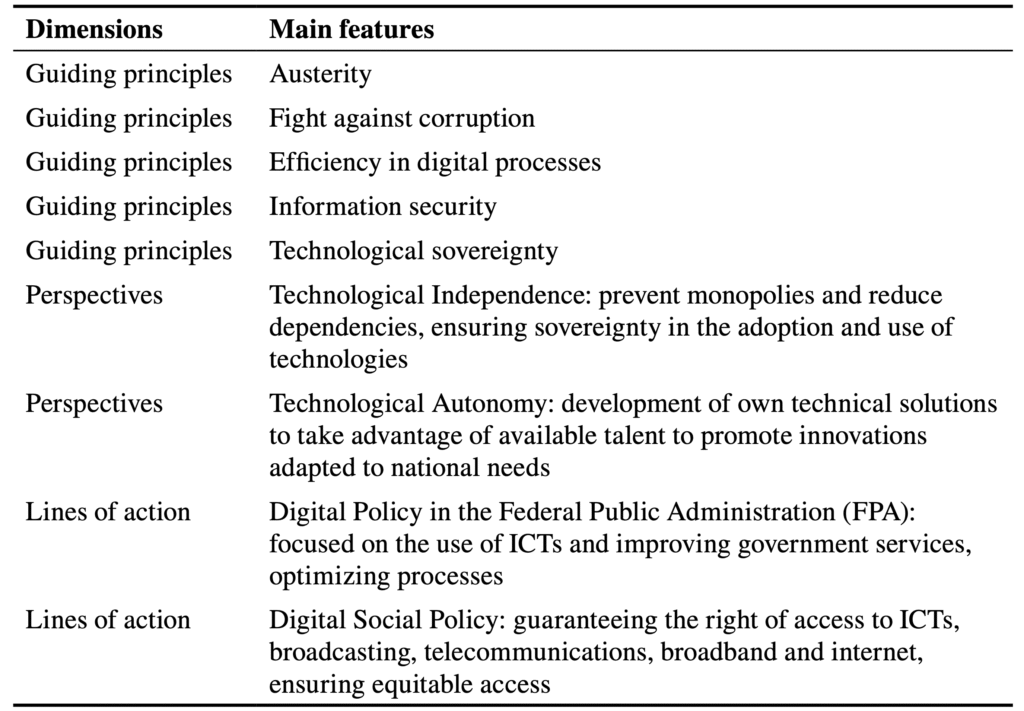
The discussion highlights how digital technologies like AI, Big Data, and the Internet of Things (IoT) are redefining global value chains (GVCs) and business models. The launch of technologies like ChatGPT marked a societal turning point, mobilizing significant investment. AI is recognized as a General-Purpose Technology (GPT) with the potential to drive widespread productivity gains across numerous sectors.
Furthermore, by framing the analysis within the context of global trends such as the fragmentation of globalization, the geopolitical rivalry between the US and China, and the social and economic uncertainties exacerbated by the COVID-19 pandemic. The study emphasize that for Mexico to achieve higher growth and close technological gaps, it must develop efficient policy frameworks that foster technological diffusion and diversify its productive structure.
The chapter concludes that Mexico must create a new national digital agenda to bridge its capacity gaps. Key recommendations include:
- Developing new governance structures to consolidate coordination between the public, private, and academic sectors.
- Designing long-term, coordinated initiatives to evaluate AI’s economic impact.
- Addressing infrastructure, security, and regulatory deficiencies to fully capitalize on nearshoring opportunities.
- Prioritizing Science, Technology, and Innovation (STI) in production processes and investing in teacher development and educational updates to build a future-ready workforce.
- Consolidating the state’s capacity to anticipate future challenges and guide strategic investments, thereby restoring public confidence.
…Continue reading the chapter [here]
Chapter 7: Building manufacturing firms’ digital technological capabilities for circular economy outcomes in developing and emerging economies Jahan Ara Peerally, Fernando Santiago, Sedigheh Moghavvemi and Emma Tambou Marianna
This chapter explores how manufacturing firms in developing and emerging economies can build Digital Technological Capabilities (DTCs) to achieve Circular Economy (CE) outcomes, a concept known as the “twin transition” of digitalization and greening. The authors argue that firms must first develop specific DTCs, which then enable them to implement circular practices like reducing waste, optimizing resource use, and extending product life cycles.
Through a systematic literature review, the chapter maps 120 potential CE outcomes to a framework of DTCs, organized across four levels of increasing complexity and six core business functions (e.g., data management, product development, supply chain management). The findings reveal that CE benefits are often transversal, meaning a single advanced DTC can generate positive environmental impacts across multiple areas of the firm and its supply chain. For instance, capabilities in IoT and data analytics can simultaneously enable predictive maintenance, reduce energy consumption, and optimize logistics.
The is concluded that most developing economies are in the early stages of this transition, with a significant gap between conceptual CE outcomes and empirical implementation. It proposes a two-pronged approach for progress:
- Leveraging Global Value Chains (GVCs): Firms can benefit from knowledge spillovers from lead firms in advanced economies, though this depends on how easily these complex DTCs can be transferred.
- Strengthening National Innovation Systems: Governments must implement supportive policies, including investing in digital infrastructure, funding public research centers, and providing incentives like innovation vouchers to help firms build the necessary skills and capabilities for a sustainable and digital future.
…You could read the chapter [here]
Chapter 8. Digital technological capability framework for financial service providers in emerging economies: the case of South Africa Michael Makgale Modiba and Raymond Mompoloki Kekwaletswe
The chapter addresses the digital transformation of the financial services sector in emerging economies, using South Africa as a case study.
Digital technologies offer immense opportunities for innovation, economic growth, and improved service delivery. Particularly, South Africa faces unique challenges. The digital divide, unequal access to technology, poverty, unemployment, and a legacy of inequality are among them . It is emphasized that the research problem is the lack of empirical studies and a context-specific framework for understanding and building digital technological capability for Financial Service Providers (FSPs) in this emerging economy context.
Two key concepts are determined in this chapter:
The impact of FinTech—such as mobile banking and digital payments—is profound in emerging economies. opposite to developed countries, where FinTech often disrupts traditional banks, emerging economies tend to favor a collaborative model between FinTech companies and established banks.
Second concept relates to the terminology of Digital Technological Capability which refers to an organization’s ability to meet its goals by strategically leveraging digital technology. This includes proficiency in utilizing digital tools, adapting to technological advancements, comprehending emerging technologies, and understanding their ethical, legal, and social impacts.
This chapter establishes that for financial service providers in emerging economies like South Africa, successful digital transformation is contingent upon developing a robust and context-sensitive digital technological capability. Moving beyond generic models, the proposed framework—grounded in the Technology-Organizational-Environmental (TOE) Framework and Information Systems (IS) Capability Model —demonstrates that capability is built at the intersection of technological adoption, strategic organizational leadership, and a supportive culture, all operating within a unique environmental context of infrastructural constraints, regulatory demands, and socio-economic inequalities.
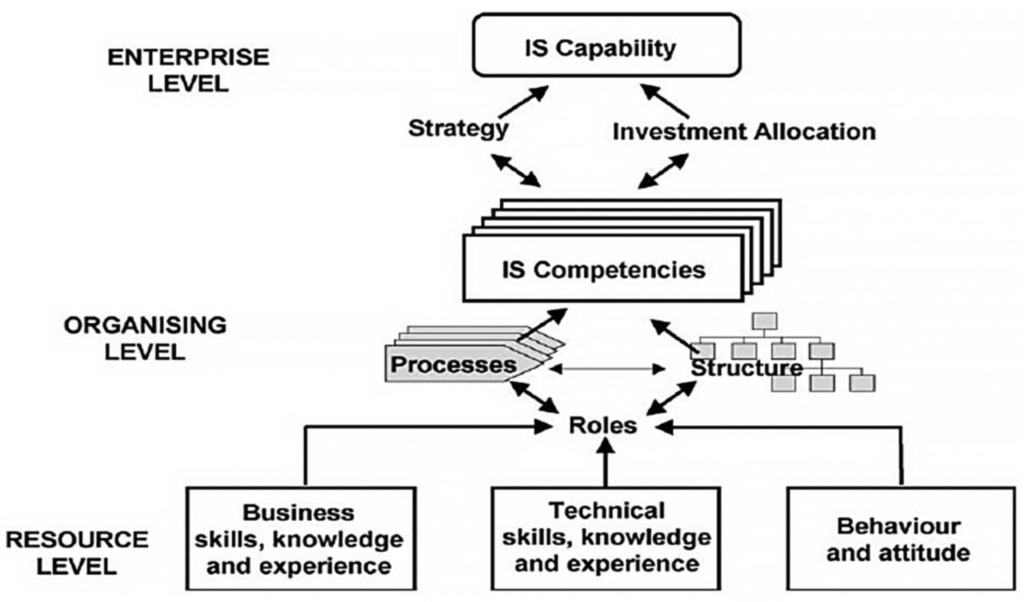
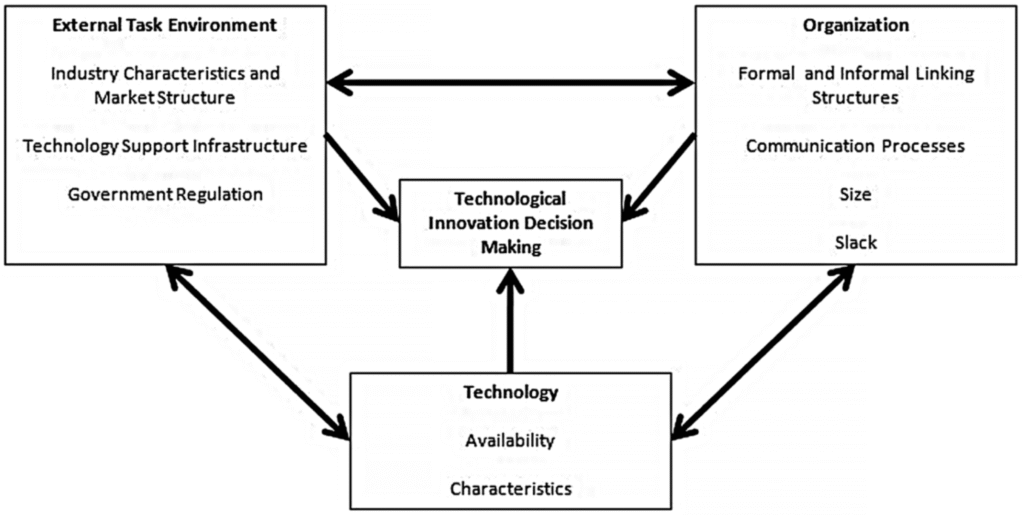
The findings emphasize that overcoming challenges such as legacy systems, skills shortages, and the digital divide requires a deliberate focus on resilience, strategic partnerships, and employee-centric change management. Ultimately, by adopting the conceptualized framework and heeding the provided recommendations, Financial Service Providers and policymakers can navigate the complexities of the digital era, thereby enhancing operational efficiency, driving financial inclusion, and fostering sustainable economic growth in the evolving landscape of emerging markets.
Read the full chapter… [You could find the source here]
Chapter 9: The determinants of enterprise digital capabilities in Sierra Leone Jude Edeh
In the global rush towards digitalization, a critical question arises:
In a challenging economic environment, what enables a business to build digital capabilities? Chapter 9, provides a data-driven answer to this question by examining the unique case of Sierra Leonean firms.
The author, Jude Edeh, investigates the powerful interplay between a company’s internal resources and the country’s external institutional environment. Using the Resource-Based View and Institutional Theory, the study analyzes data from over 500 firms to uncover what truly fuels their digital transformation.
Accordingly, the research reveals three key determinants:
The International Lifeline: The study identifies a powerful solution known as international exposure. Companies engaging in foreign technology exports, and those processed international certifications have significantly stronger digital capabilities. This advantage stems from their access to advanced knowledge, technology, and global networks, enabling them to overcome local institutional challenges effectively.
Internal Resources are Crucial: The study confirms that a firm’s own resources—such as a manager’s experience, capacity for innovation, and investment in staff training—are a primary driver for developing digital capabilities. This means that even in a constrained environment, businesses that cultivate their internal strengths are better positioned to adopt digital tools.
The Institutional Bottleneck: A critical finding is that poor institutional quality—issues like corruption, inadequate infrastructure, and a weak legal system—actively weakens the positive effect of a firm’s resources. Essentially, a difficult business environment can suffocate a company’s best efforts to go digital.
For businesses in developing economies, building digital capabilities is not just an internal effort…
..Read the full chapter… [You could find the source here]
Chapter 10: Pragmatist reflection on how micro and small businesses use digital technology to enhance dynamic capabilities in uncertain situations in Ghana Adebowale Owoseni, Sylvester Hatsu and Adedamola Tolani
Large corporations often dominate discussions on business strategy. This new study, however, shifts the focus to another level of analysis: micro and small businesses (MSBs).
This research explores how MSBs in a low-income country leveraged their dynamic capabilities. These competences foster the ability to adapt, absorb new information, and innovate to survive the extreme disruptions. The authors adopt a pragmatist lens that is not only focusing on abstract theory but also on the tangible, and real-world actions of the entrepreneurs.
The findings of such study reveal several key insights of resilience including:
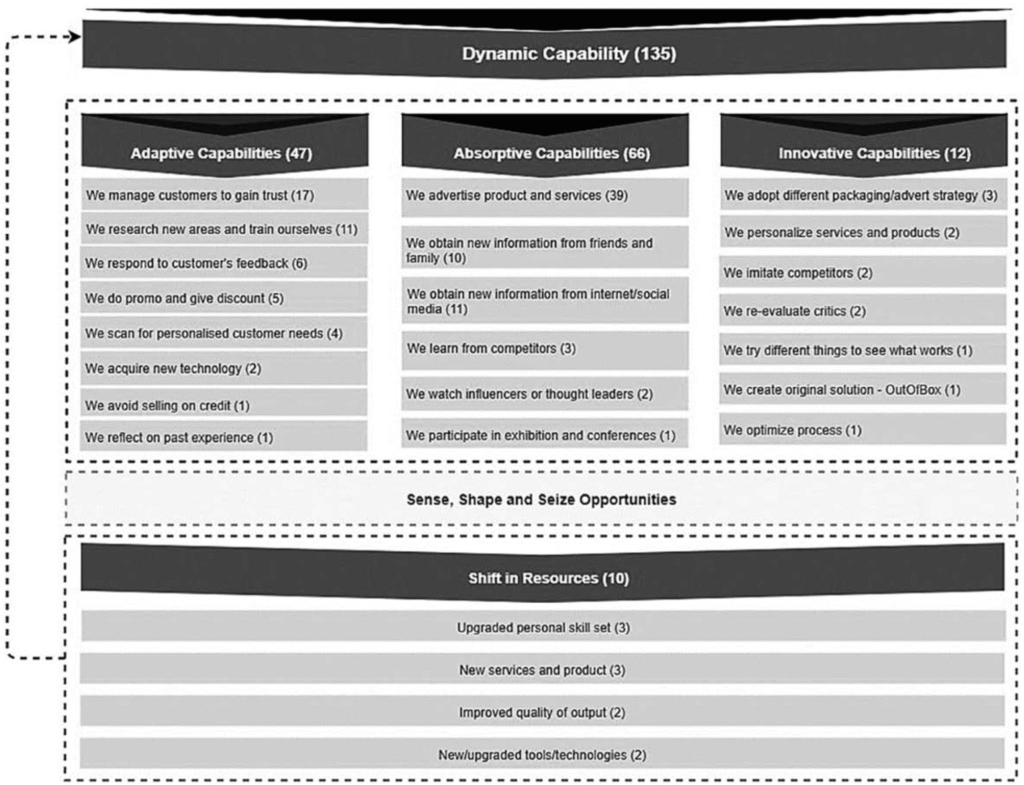
A Toolkit for Adaptation: The study identified 21 practical strategies (or constructs) that MSBs used to cope, ranging from managing customer trust and up-skilling to obtaining information from the internet and personalizing services.
It is found that when the pandemic hit, these businesses intensified their use of strategies by using the digital Pivot of technologies by an average of 58% to 82%. Crucially, their adoption of digital technology shifted—moving from a primary reliance on social media (like WhatsApp) to embracing payment technologies like mobile money to overcome lockdowns and cash transaction barriers.
The Dynamics of Dynamic Capability: A key insight is that while the collective toolkit of strategies remained the same, each business uniquely combined them. There is no one-size-fits-all formula; success came from intelligently selecting and mixing strategies to fit their specific context.
Read the full chapter for a deeper dive into the practical strategies and their implications. [You could link to the source here].
Chapter 11: Data-driven approach for the digital transformation in small and medium-sized enterprises: insights from Brazil Enzo Morosini Frazzon, Luciana Stradioto, Julia Cristina Bremen and Pedro Onorio
In the race toward Industry 4.0, much of the spotlight shines on large corporations. But, what about the SMEs forming the backbone of economy? Chapter 11 of the book tackles this very question.
The main research gap explained by authors is about how to achieve digital transformation concept for SMEs. SMEs face unique hurdles, from limited budgets and informal processes to a perceived over-complexity of digital solutions.
Frazzon etc al. (2025 ) research moves beyond theoretical frameworks and uses a powerful tool: simulation. The team created a digital twin of a real Brazilian metal-mechanic company’s assembly line.

The authors tested three scenarios:
Scenario 1 (The Real World): A non-digitized process with paper orders and no real-time data.
Scenario 2 (The Improvement): Introduction of digital technologies like a Manufacturing Execution System (MES) and data analytics.
Scenario 3 (The Optimum): A fully optimized, data-driven workflow.
The results demonstrate that the scenarios (C2 and C3) resulted in dramatic reduction in lead time by up to 59%. C2 & C3 had also surged the production schedule accuracy from 40% to over 94%. This directly translated to more reliable deliveries and reduced revenue loss…
…Read the full chapter for a deep dive into the methodology, results, and practical recommendations. [link to the source]
The term digital capability is divided into two forms: Creative capabilities, which enable innovation, new value creation, and competitive differentiation. And, Extractive capabilities, which improve efficiency, reduce costs, and automate tasks. This dual logic helps leaders diagnose where their organization stands and what they must build next.
The book clarifies how organizations evolve. And, what truly separates digital leaders from digital laggards.
it offers a structured, evidence-based framework which helps navigating digital transformation. The book is valuable for business executives, policymakers, academics, and students. Grounded in real organizational challenges and strategies, it serves as both a comprehensive guide and a practical roadmap.
Reference
Figueiredo, P. N., & Zahra, S. A. (Eds.). (2025). Building Digital Technological Capabilities. Cheltenham, UK: Edward Elgar Publishing. Retrieved Nov 20, 2025, from https://doi.org/10.4337/9781803922362