







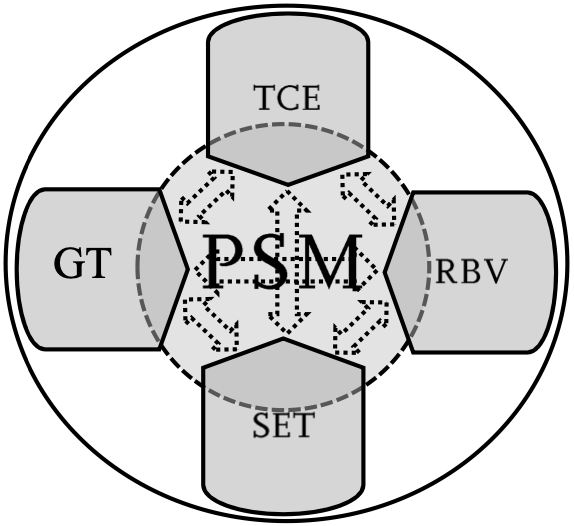
Purchasing and Supply Management (PSM) field has become a cornerstone of modern business strategy, connecting firms to suppliers, customers, and global networks. Despite its critical role, PSM lacks a unified theoretical foundation, and it’s instead relying on theories borrowed from other management disciplines. Unlike marketing, operations management, or strategic management, PSM scholars ought to adapt frameworks like Transaction Cost Economics (TCE), Resource-Based View (RBV), Game Theory (GT), and Social Exchange Theory (SET) to explain its phenomena, research questions, and outcomes (Wynstra, Suurmond, and Nullmeier; 2019).
 Curated by Business Science Daily — peer-reviewed sources, human-verified.
Learn more
Curated by Business Science Daily — peer-reviewed sources, human-verified.
Learn more
About Our Curation Process
Business Science Daily curates academic research in business and economics. Each featured study is selected from reputable, peer-reviewed journals, institutional repositories, or working papers (e.g., Elsevier, Sage, NBER, SSRN).
Articles are carefully summarized to ensure clarity and accuracy, with direct citations or links to original sources. Our process emphasizes transparency, academic integrity, and accessibility for a broader audience.
Learn more in our Editorial Standards & AI Policy.
This reliance on external theories has led to both theoretical fragmentation and innovative integration efforts, shaping how researchers define, analyze, and apply PSM concepts across global supply chains.
External Theories Driving PSM Research
- Transaction Cost Economics (TCE)
Originating from Coase (1937) and Williamson (1985), TCE examines how firms minimize transaction costs through governance structures like contracts, hierarchies, and hybrids.
In PSM, TCE is widely used for (1) make-or-buy decisions, (2) outsourcing strategies, and (3) supplier relationship management.
Its core elements consist of asset specificity, uncertainty, opportunism, and governance, explaining how organizations choose between internal production and external sourcing. TCE remains the most frequently applied theory in PSM studies.
- Resource-Based View (RBV)
RBV, developed by Wernerfelt (1984) and Barney (1991), focuses on how firms gain competitive advantage through valuable, rare, inimitable, and non-substitutable resources (VRIN). In PSM, RBV mainly emphasizes on supplier capabilities, buyer–supplier collaboration, and joint knowledge creation.
While TCE treats suppliers as cost centers, RBV highlights strategic value and capability building, making it essential for long-term partnership management.
- Game Theory (GT)
Rooted in mathematics and economics, Game Theory (von Neumann & Morgenstern, 1944; Nash, 1950) models strategic interactions where outcomes depend on multiple players. PSM applications of GT is designated for negotiation strategies, contract design, and coordination between buyers and supplier among other subjects.
GT provides a structured way to analyze cooperation, competition, and the evolution of trust in repeated business interactions.
- Social Exchange Theory (SET)
Introduced by Homans (1961) and Blau (1964), SET explains organizational behavior through trust, reciprocity, and mutual benefit. In PSM, SET addresses the human and relational dimensions of supplier interactions, including commitment, power dynamics, and dependency management.
SET complements economically driven frameworks like TCE by incorporating social and relational perspectives.
The Power of Theoretical Integration in PSM
No single theory fully explains the complexity of modern supply management. Researchers increasingly integrate these frameworks to provide holistic insights:
- TCE–RBV: Combines cost minimization with capability development for dual analysis of efficiency and strategic advantage.
- TCE–SET: Links governance with relational trust, clarifying long-term supplier partnerships.
- RBV–GT: Connects resource asymmetries with strategic decision-making in negotiations and collaborations.
- GT–SET: Explores how trust and social norms evolve in repeated interactions modeled through game theory.
These combinations demonstrate that theories can be complementary, offering multi-angle solutions for complex PSM problems like sustainability, digital transformation, and global risk management.
Purchasing and Supply Management sits at a strategic crossroads. Its fragmented theoretical base, relying on TCE, RBV, GT, and SET, reflects both a weakness and a source of strength. By integrating economic, strategic, and relational perspectives, researchers can generate insights that are contextually relevant, practically meaningful, and holistic.
As PSM continues to mature, its theoretical pluralism may become its greatest asset—transforming fragmentation into a platform for innovation, interdisciplinary advancement, and strategic impact.
Reference
Barney, J. (1991). Firm resources and sustained competitive advantage. Journal of management, 17(1), 99-120.
Blau, P. M. (1964). Justice in social exchange. Sociological inquiry, 34(2).
Coase, R. H. (2012). The nature of the firm. In The roots of logistics (pp. 317-333). Springer, Berlin, Heidelberg.
Homans, G. C. (1961). The humanities and the social sciences. American Behavioral Scientist, 4(8), 3-6.
Nash, J. F. (1950). The bargaining problem. Econometrica, 18(2), 155-162.
Pereira, C. R., da Silva, A. L., Tate, W. L., & Christopher, M. (2020). Purchasing and supply management (PSM) contribution to supply-side resilience. International journal of production economics, 228, 107740.
Von Neumann, J., & Morgenstern, O. (1944). Theory of games and economic behavior. Princeton University Press.
Wernerfelt, B. (1984). A resource‐based view of the firm. Strategic management journal, 5(2), 171-180.
Williamson, O. E. (1985). The economic institutions of capitalism. Firms, markets, relational contracting. In Das Summa Summarum des Management: Die 25 wichtigsten Werke für Strategie, Führung und Veränderung (pp. 61-75). Wiesbaden: Gabler.
Wynstra, F., Suurmond, R., & Nullmeier, F. (2019). Purchasing and supply management as a multidisciplinary research field: unity in diversity?. Journal of Purchasing and Supply Management, 25(5), 100578.